Home / Compare / Diffuse vs patterned thinning
Is it this or that?
Diffuse vs patterned thinning
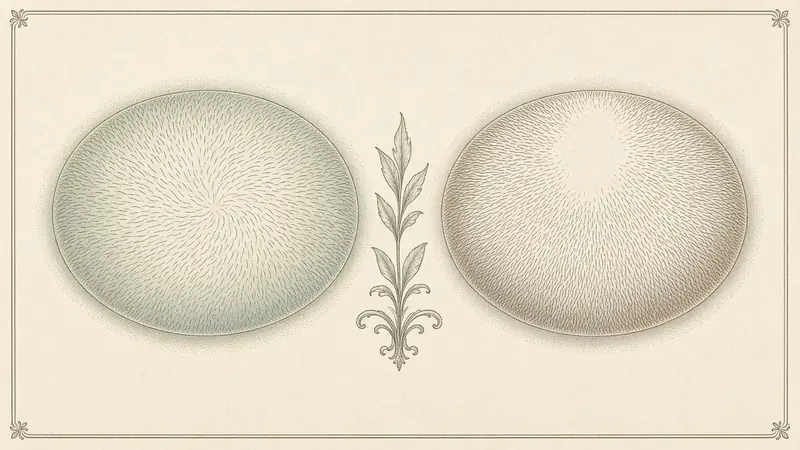
What diffuse thinning looks like
Diffuse thinning is even. The whole head feels less full, the ponytail is smaller, and more hair than usual turns up in the brush, the shower and on clothes. One common cause is telogen effluvium, in which many hairs shift into the resting phase at once and shed together, often two to three months after a trigger such as illness with fever, childbirth, surgery, a crash diet, a new medicine or severe stress (Headington, 1993; Malkud, 2015). Acute telogen effluvium often settles within about six months once the trigger has passed; some people have a longer, chronic form.
What patterned thinning looks like
Patterned thinning has a map. In many women it is concentrated over the top and crown with a preserved front hairline, often first visible as a widening part; in many men it follows the temples and crown (Olsen, 2001; Norwood, 1975). It tends to come on gradually, without a dramatic increase in shedding, and the hairs in the affected area become finer and shorter, a process called miniaturization (Rakowska, 2009).
Side by side
| Feature | Diffuse (often shedding) | Patterned |
|---|---|---|
| Where | All over the scalp, sides and back included | Top, part and crown, or temples and crown |
| Pace | Over weeks to a few months | Gradually over years |
| Shedding | Clearly more hair in brush and shower | Often no dramatic increase |
| Trigger | Often an event two to three months earlier | Usually none; family history is common |
| Short hairs | New regrowth with tapered tips appears later | Finer, shorter hairs mixed among normal ones in the affected zone |
| Back of the head | Also less full | Usually stays full |
The two can overlap. A shedding episode can unmask a pattern that was developing quietly, and a person with a pattern can also have a shedding episode. That is why the comparison with the back of the head, and a look at the timeline, both matter.
How to sort your picture
- Write down any events in the four months before the change: illness, fever, birth, surgery, new medicines, big changes in diet or weight, severe stress.
- Photograph the part, crown and the back of the head in the same light, and compare coverage on top with the back.
- Collect the hairs from one wash or brushing and look at the root ends. Shed hairs have a small pale bulb. See shed vs broken.
- Consider blood work. Low ferritin, low vitamin D and thyroid problems are among the issues clinicians check when shedding increases (Shapiro, 2007).
For timelines after a specific trigger, the Shed Clock on Hair Experts goes into more depth. The quiz on this page can point you to a sensible first step, which for most diffuse pictures is a test rather than a product.
A note on timing
Diffuse shedding is distressing, but its timing is one of the most useful things about it. Because hairs shed two to three months after the trigger, the hair you are losing now is reporting on something that already happened, and the follicles are usually already starting the next growth phase. New short hairs with tapered tips along the part and hairline are often the first sign of recovery, and they can take several months to add visible fullness. Patterned thinning, by contrast, rarely announces itself with a shower full of hair. That difference in tempo, fast and noisy versus slow and quiet, is often the clearest clue of all, which is why writing down dates is so valuable.
When to see a professional
See a doctor, dermatologist, or a trichologist listed at trichology.com if shedding is heavy or lasts more than about six months, if you have other symptoms such as fatigue, weight change or irregular periods, or if you see patches, soreness or scale.
What is a sensible first step?
For thinning or shedding that feels all over. Four one-tap questions. Nothing is stored.
A reading of a picture, not a diagnosis. Your answers stay on this page and are never stored.
If your answers point toward diffuse, the Shed Clock on Hair Experts is the right next tool: it works from the date of the event rather than from the picture.
Questions people actually ask
Can stress cause diffuse thinning?
Severe physical or emotional stress is one recognized trigger of telogen effluvium, which typically shows as increased shedding two to three months later and often settles once the trigger has passed.
Can you have both at once?
Yes. A shedding episode can make a developing pattern more noticeable, and the two can coexist. A professional can help separate them.
Keep reading
Sources
- Headington JT. Telogen effluvium: new concepts and review. Arch Dermatol. 1993;129(3):356–363.
- Malkud S. Telogen effluvium: a review. J Clin Diagn Res. 2015;9(9):WE01–WE03.
- Olsen EA. Female pattern hair loss. J Am Acad Dermatol. 2001;45(3 Suppl):S70–S80.
- Rakowska A, Slowinska M, Kowalska-Oledzka E, Olszewska M, Rudnicka L. Dermoscopy in female androgenic alopecia: method standardization and diagnostic criteria. Int J Trichology. 2009;1(2):123–130.
- Shapiro J. Hair loss in women. N Engl J Med. 2007;357(16):1620–1630.