Home / Care / Supporting patterned thinning
Care
Supporting patterned thinning
What support means here
If the picture you have been recording looks like a pattern (a widening part, a Christmas-tree shape, a thinning crown, temples that are travelling), support is the modest word this site will use. It is not a cure, and it is not a diagnosis. The most carefully studied medicines for patterned hair loss are prescribed or, in the case of topical minoxidil, sold as a recognized over-the-counter treatment in many places. This page will not hide that. It will also not pretend that a supplement or a serum is the same thing as those medicines, or that you should start, stop, or replace anything a clinician has given you.
What a care page can honestly do is describe the kinds of support people use alongside an examination: a topical, a supplement aimed at DHT-related pattern support, a gentle wash, sometimes a device, and a photography plan so that you can see whether anything is changing.
The first step is still a reading of the picture
A patterned diagram is famous, and it is easy to climb into one too early. A sudden even shed, traction at the edges, and a scarring process on the crown can all be made to look like a pattern if you want them to. Read the presentation pages, take a comparable set, and, if you can, be examined. A dermatologist, or a trichologist at trichology.com, can look at the scalp with a dermatoscope and say whether support of this kind is even the right family of ideas.
| Kind of support | What it can reasonably be | What it is not |
|---|---|---|
| A prescribed medicine, or topical minoxidil where it is available | The options with the longest clinical track record for patterned thinning. | Something this site will prescribe, or tell you to stop. |
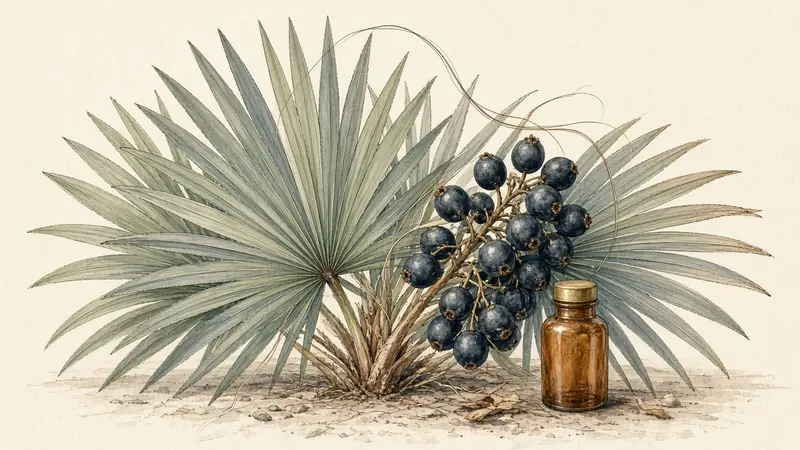
| A saw-palmetto supplement | A dietary supplement used by some people as pattern support. | A replacement for finasteride or dutasteride. |
| A leave-on serum or a gentle shampoo | A topical routine, or a less aggressive wash. | A way to redesign a Norwood or Ludwig drawing on its own. |
| A low-level laser device | A device some people use for patterned thinning; clearance is not a guarantee for every stage. | A first purchase for a sudden even shed, or a treatment for a scarring alopecia. |
How you would tell whether support is doing anything
Not with a weekly selfie. Use the comparable-photo protocol, and give a routine enough months to be judged, unless a clinician has given you a different timeline or a reason to stop. If the scalp becomes sore, or the picture worsens quickly, go back to the clinician rather than adding a second product in private.
When support is the wrong page
If the scalp is shiny, painful, or patchy, or if eyebrows are going too, this is not the page. If the change is timed to a birth, a medicine, or an illness, start with diffuse thinning and with Hair Experts. If you already have a prescription, this page will not tell you to swap it.
Time, and how you would notice a change
Patterned change, and any support aimed at it, is slow. A fair test is a comparable photograph set at the start and again after several months, not a daily inspection under a new bulb. If you add a supplement, a serum, or a device, add only one new thing at a time when you can, so that a reaction or a change has a chance of being attributed. Keep a short note of what you started and when. If nothing has moved in the photographs and the scalp is comfortable, that is information; it is not always a reason to double the dose in private. If the picture has worsened, or the scalp has become unhappy, it is a reason to go back to a clinician rather than to finish the bottle on principle.
Which kind of support fits you?
For a gradual change at the part, crown or temples. Four one-tap questions. Nothing is stored.
A reading of a picture, not a diagnosis. Your answers stay on this page and are never stored.
What people use for this
For a gradual change at the part, crown or temples, people who want to support the hair they have usually combine a daily step they will keep up with a fair photo record. These are the two options on this page.
- DHT Blocker Maximum Strength: a dietary supplement aimed at DHT-related pattern support.
- LC Elite Laser Cap: an 80-diode laser cap described by the manufacturer as FDA cleared.
Not sure which fits? The short quiz on this page suggests one first step from your answers.
If you would rather have the pattern confirmed before choosing support, a dermatologist or a trichologist listed at trichology.com can examine the scalp, often with a dermatoscope, and tell a patterned picture from its lookalikes.
Questions people actually ask
Should I use minoxidil?
That is a question for a clinician, and for the label of the product you would actually use. This site will not start you on it, and it will not tell you to stop if you already use it. Hair Experts holds the timelines for a shed that can accompany a start or a stop.
Can a saw-palmetto supplement replace finasteride?
No. This site will not say that, and the product card below is explicit about it.
Keep reading
Sources
- Olsen EA. Female pattern hair loss. J Am Acad Dermatol. 2001;45(3 Suppl):S70–S80.
- Norwood OT. Male pattern baldness: classification and incidence. South Med J. 1975;68(11):1359–1365.
- Ludwig E. Classification of the types of androgenetic alopecia occurring in the female sex. Br J Dermatol. 1977;97(3):247–254.
- American Academy of Dermatology. Hair loss resource center (public information).